
Restaurant Equipment Disposal in DFW: Sell, Recycle or Haul
A restaurant kitchen is worth more in pieces than it looks on closing night, and it is where licensed trades, not the hauler, decide the order of work.
Call (682) 226-7611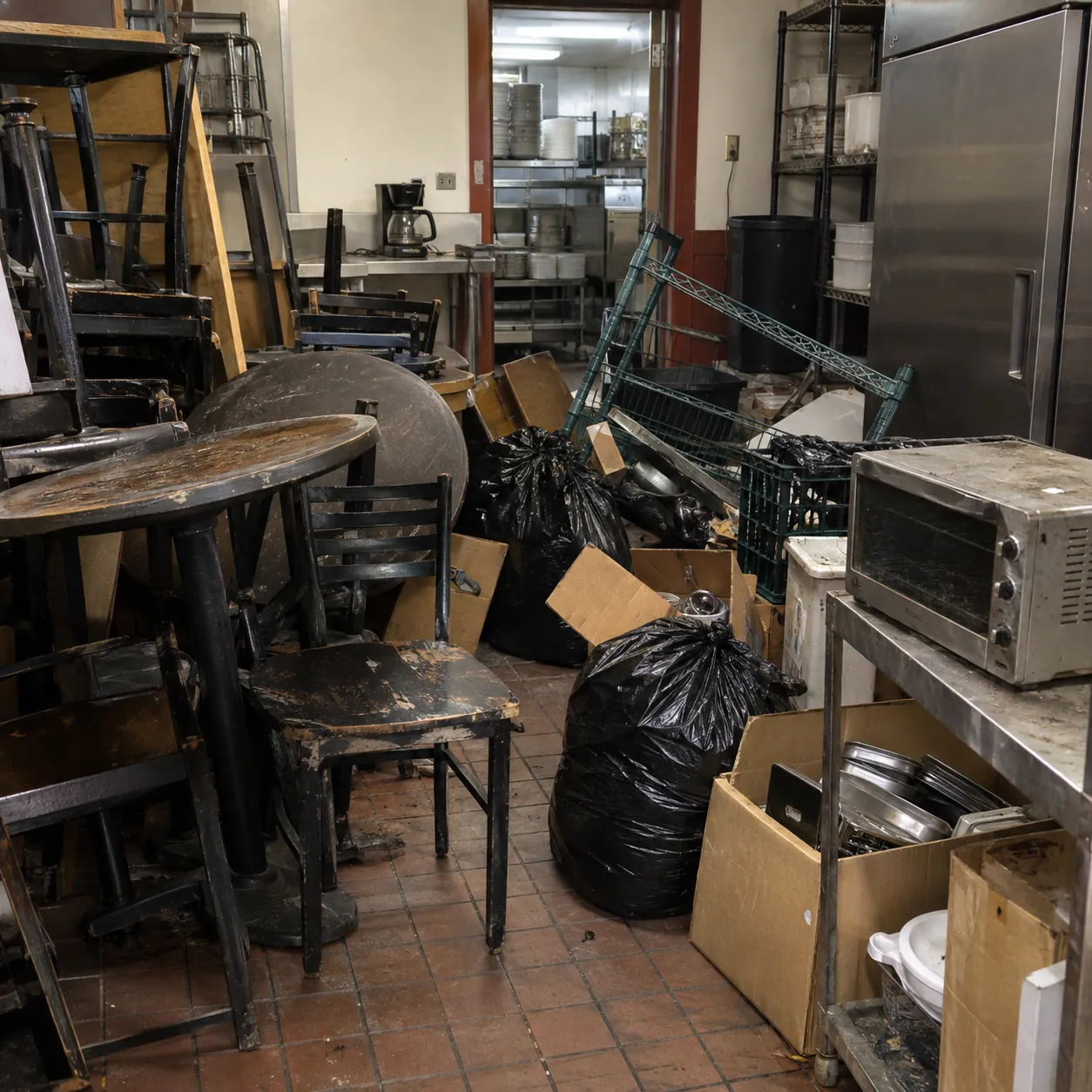
The short answer
When a DFW restaurant closes or refits, sell working equipment to a used restaurant equipment dealer first, send stainless and steel to a scrap recycler, and bring in specialists for grease and cooking oil, gas disconnection and refrigerant recovery. Junk Koala Arlington then hauls the dining room, smallwares and decommissioned equipment within its Arlington and Mid-Cities territory.
- Sell first
- Dealers want clean, working equipment, ideally seen running before it is disconnected.
- Grease and oil
- A licensed grease hauler collects it; this branch does not handle either.
- Gas and refrigerant
- A licensed plumber disconnects gas; a certified technician recovers refrigerant.
- Coverage
- Arlington and the Mid-Cities; Dallas and Fort Worth restaurants go to other Junk Koala branches.
Three piles, in the right order
Every piece of a restaurant ends up in one of three places: back into another kitchen through a dealer or a buyer, into a scrap recycler as metal, or onto a truck for donation or disposal. The order matters, because each route is worth less the later you take it. A reach-in that still holds temperature can be sold. The same unit after a month unplugged in a hot, closed dining room, disconnected in a hurry, is scrap.
The other thing that sets the order is the work only licensed trades can do. Grease, gas and refrigerant all have to be dealt with before the equipment attached to them can move, and none of the three is hauling work. Book them first and everything else falls into line behind them.
This guide is written for owners and operators anywhere in Dallas–Fort Worth, but Junk Koala Arlington's own crews work only in Arlington, Irving, Grand Prairie, Mansfield, Hurst, Euless, Bedford, Grapevine, Southlake, Colleyville, Pantego, Dalworthington Gardens and Kennedale. Restaurants in Dallas or Fort Worth are served by other Junk Koala branches.
Where each kind of kitchen equipment usually ends up
A starting sort. Condition, age and the market that week decide the details.
| Equipment | Most likely route |
|---|---|
| Working ranges, fryers, ovens and griddles | Dealer or private sale, after a licensed plumber has disconnected and capped the gas |
| Reach-ins, prep coolers and freezers | Sale if they hold temperature. If not, the refrigerant comes out first, recovered by a certified technician, and then the unit can be scrapped or hauled |
| Walk-in cooler or freezer | Check the lease first, because it may belong to the building. The refrigeration system needs a certified technician either way |
| Stainless prep tables, sinks and wall shelving | Resale if clean and undamaged; a scrap metal recycler if not. Stainless is worth something by the pound |
| Wire shelving, dunnage racks and sheet pan racks | Resale in quantity, or scrap metal |
| Hood and fire suppression system | Specialist contractors only, and possibly part of the building under the lease. Confirm before anyone touches it |
| Dish machines, ice machines and beverage equipment | Check whether they are leased or supplier-owned before selling or scrapping anything |
| Grease trap contents and used cooking oil | A licensed grease hauler, never a junk truck |
| Dining tables, chairs, booths, smallwares and decor | Sale or donation where sound; otherwise ordinary hauling |
The three jobs that need a license, not a truck
Grease and cooking oil go to a licensed grease hauler. That covers the used oil in the fryers and the contents of the grease trap or interceptor, and the collection should be booked before the kitchen equipment around it moves, not after somebody has tipped a half-full fryer onto a dolly.
Gas equipment needs a licensed plumber to disconnect it and cap the line. Unscrewing a range from its flexible connector is not the same thing, and a properly capped line is what the landlord and the next tenant will expect to find.
Refrigeration, meaning walk-ins, reach-ins, refrigerated prep tables and ice machines, needs a certified technician to recover the refrigerant before a unit is scrapped or hauled for disposal. A unit sold in working order keeps its charge and leaves with the buyer. Junk Koala Arlington does none of these three jobs itself. It clears what remains once they are done, and it says so at the quote rather than discovering it on site.
- Grease and cooking oil: licensed grease hauler
- Gas disconnection and capping: licensed plumber
- Refrigerant recovery: certified technician
- Hardwired equipment: an electrician to isolate it
Sequencing the clear-out around the lease handback
Work backwards from the day the keys go back. This is general practice, not legal advice. Your lease decides what stays, what goes and what condition the space is returned in.
- 1
Read the surrender clause and sort ownership
Mark each major item as yours, the landlord's, or leased from a supplier. The hood, the walk-in and the grease interceptor are the items most worth checking, so settle those first.
- 2
Get dealer offers while everything still runs
A buyer who can see a unit at temperature is buying a working unit. Ask whether they remove what they buy, and on which day.
- 3
Book the licensed trades
The grease hauler for the oil and the trap, a plumber to cap the gas, a technician for refrigerant and an electrician for anything hardwired, with dates that leave slack before the handback.
- 4
Let buyers and scrap collect first
Sold equipment leaves first, then anything going to a metal recycler, so the hauling crew is not working around pieces someone else is due to collect.
- 5
Clear everything else in one visit
Dining furniture, booths, smallwares, dry storage shelving, office contents and decommissioned equipment, usually overnight or on a closed day. Booths fixed to the floor need dismantling, so mention them at the quote.
- 6
Photograph the empty space
Dated photos of every room, taken before the walk-through, are the record that answers any later question about the condition the space was left in.
What the hauling costs once nothing is left to sell
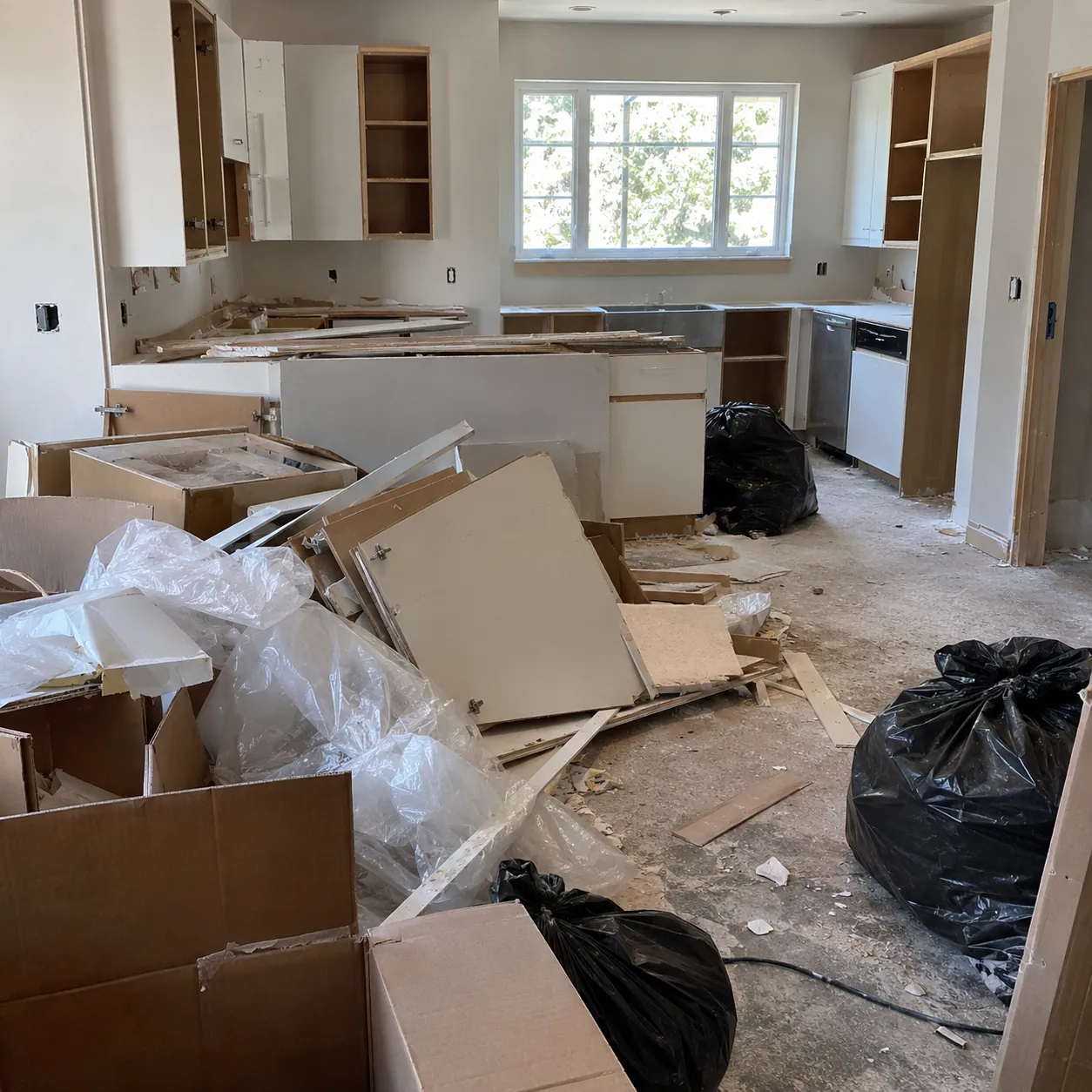
A one-off restaurant clear-out is priced from the Junk Koala price book like any other load, by the share of the truck it fills: $249 for a quarter truck up to $699 for a full one, before sales tax. Loads over one truck and mixed construction debris from a refit are quoted by a person after looking rather than from a list, and businesses with repeat work can ask about an account.
The cheapest version of this job is the one where the sale and the scrap went well. Every working fryer a dealer collects and every stainless table that goes to a recycler is volume the truck does not carry, and on a commercial kitchen volume is most of the price.
The expensive version is the one where nothing was sequenced. The grease is still in the trap, the gas is still connected, the walk-in still holds its charge, and the crew that arrives can take the chairs and not much else. That costs a second visit at the least, and on a handback date it can cost a good deal more.
Closing or refitting in Arlington or the Mid-Cities?
Tell us what has sold, what the licensed trades have finished and what is left. You get a plain answer on what we can take and a figure for it.
FAQ
Related questions
- Who buys used restaurant equipment in Dallas–Fort Worth?
- Used restaurant equipment dealers are the main buyers, followed by auctions and private sales to other operators. Dealers want clean, working, reasonably current equipment, and they can only judge it working if they see it running. Junk Koala Arlington is not a buyer or reseller; it hauls what is left after the sale.
- Will a junk removal company take used cooking oil or grease trap waste?
- No, not this one. Used cooking oil and grease trap waste go to a licensed grease hauler, and Junk Koala Arlington handles neither. Book that collection before the kitchen is cleared so nobody is moving equipment around a full trap.
- Do I need a plumber to disconnect a commercial gas range before it is removed?
- Yes. A licensed plumber should disconnect the gas and cap the line before any range, fryer or oven is moved. The crew will not do it, and gas equipment has to be isolated by a licensed trade before the crew arrives.
- What do I do with an old walk-in cooler when the restaurant closes?
- Check the lease first, then call a refrigeration technician. A walk-in may belong to the building, and either way a certified technician has to recover the refrigerant before the system is scrapped or removed. Whether the insulated panels come out at all is a question for the lease and the landlord.
- Is scrap metal from a restaurant kitchen worth anything?
- Yes, though how much depends on the metal and that week's scrap prices. Stainless prep tables, sinks, shelving and racks are the usual candidates, and sending them to a recycler or a reuse buyer shrinks the load that has to be hauled.
Ready when you are
You point. We haul. That is the whole arrangement.
Choose a window from the live Arlington calendar, or send a few photographs and get the number first. Homes or businesses, one item or a whole property.
Or call (682) 226-7611
The Arlington branch
Junk Koala Arlington
1140 W Pioneer Pkwy, Ste 1144E
Arlington, TX 76013