
Keep the Crew Working. We Will Handle the Debris.
Debris taken off live sites at each phase change, at rates agreed once and billed monthly. A finish carpenter in a transfer-station queue is the most expensive way anyone has ever moved a skip-load of offcuts.
Call (972) 093-0938- Agreed rates, no re-quoting per job
- Scheduled against the trade sequence
- One consolidated invoice by site reference
- Early, late and weekend slots
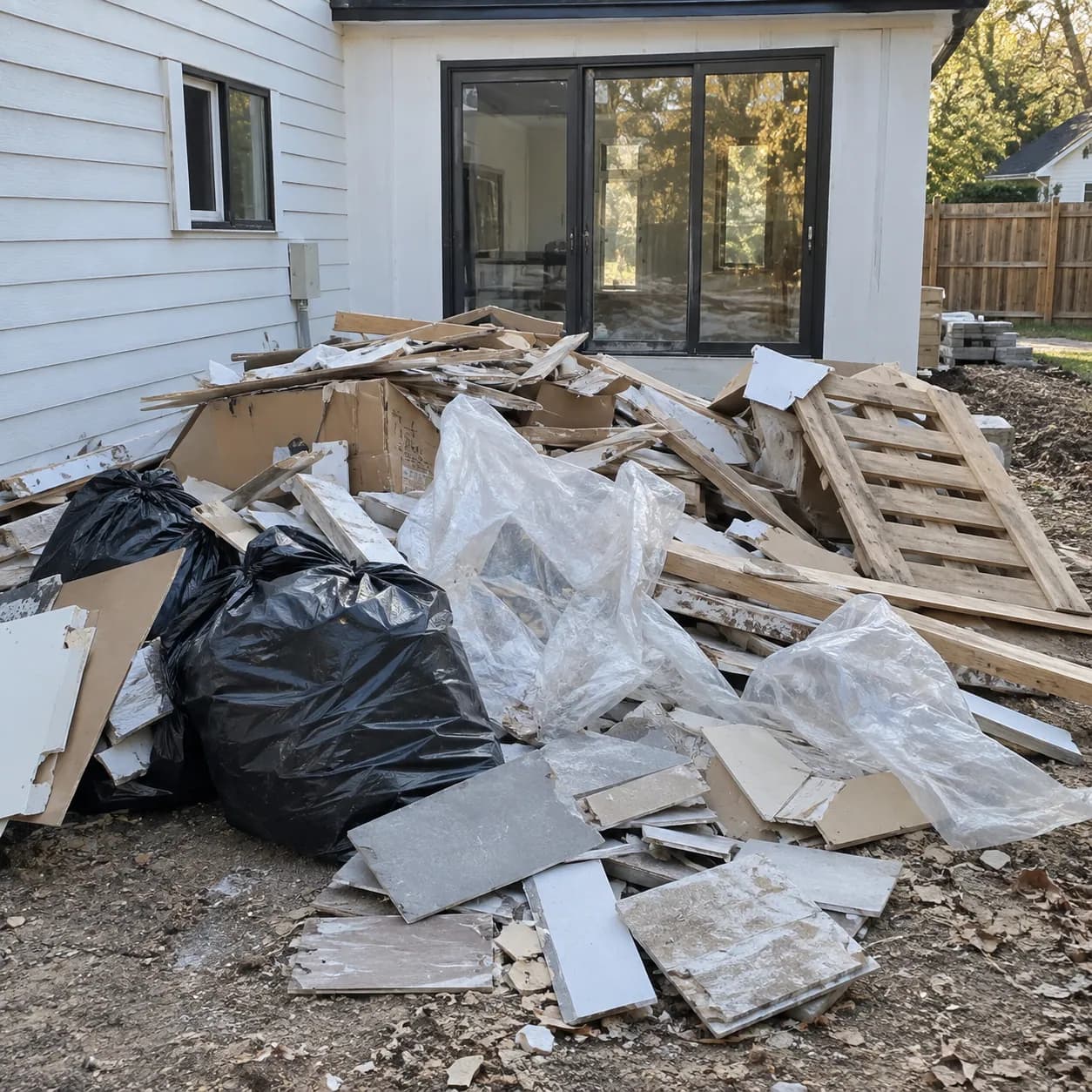
Keep the crew working. We will handle the debris.
Send a finish carpenter to the transfer station and the trip costs you the drive, the queue, the unload, the drive back, the tip fee, the fuel and a half day of skilled labour. It also costs you a truck doing something it was not bought for, and a site running one person short while the clock on the program keeps going.
That is the comparison that actually matters. Not what debris removal costs against nothing, but what it costs against a tradesman not doing the work you are paying them to be on site for.
The second cost is administrative and it scales badly. One job needing a pickup is a phone call. Five live jobs each needing pickups at unpredictable points is somebody’s afternoon every week, spent getting quotes for work that is identical every time.
What an account gives you
None of it is a headline discount, and all of it is worth more than one.
Rates set once
A pickup becomes an address and a date. You already know what the load costs before anyone picks up a phone.
Somebody who knows the sites
A named contact who does not need the program, the access or the trade sequence explained again on every job.
Scheduled to the sequence
Booked against when the strip-out finishes, not against when a slot happens to open up in a diary.
One monthly invoice
Broken out by site reference so it drops into job costing without anyone re-coding lines by hand.
Trades on accounts here
General contractors
Whole-home programs where debris arrives in six waves weeks apart and each one blocks the trade behind it.
Learn moreKitchen and bath remodelers
A strip-out day produces the entire room at once, and the fitters need it gone before they can set out.
Learn moreFlooring contractors
Carpet with pad, tack strip and tile on thinset — dense loads that sit directly on the critical path.
Learn moreApartment renovation contractors
Unit upgrade programs in occupied buildings, where nothing can stage in a breezeway.
Learn moreRetail and TI fit-out
Build-outs against an advertised opening date, worked through service corridors out of hours.
Learn moreInvestors and flippers
A clearance on the day of closing, then debris through the rehab on the same arrangement.
Learn moreThe jobs where a dumpster wins
Worth saying plainly rather than talking around: if your site produces debris steadily for a fortnight or more and there is somewhere legitimate to stand a container, a roll-off is cheaper per ton and you should use one. Booking daily pickups against that pattern is the wrong tool, and selling it to you would cost us the account within a month.
Scheduled trucks win in a different set of conditions. Debris arriving in two or three bursts rather than continuously. Infill lots and Arlington strip-center units with nowhere to put a container. Apartment renovations where a roll-off would occupy resident parking for a week and the property would refuse it. And dense material that hits a container weight cap while the box still looks two-thirds empty.
Plenty of larger programs run both — a container for the steady demolition, scheduled pickups for the phases that spike. That combination is usually the correct answer rather than a compromise.
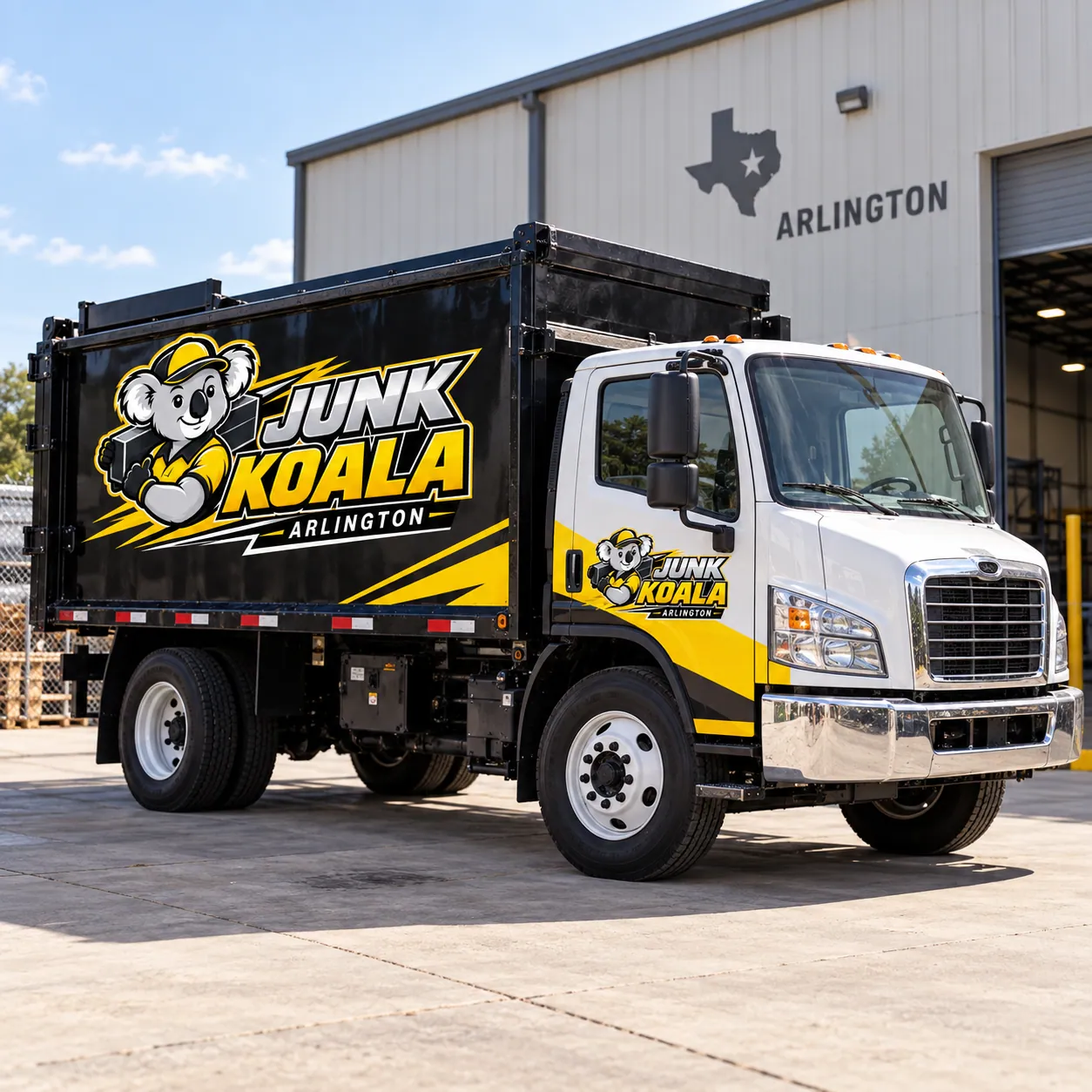
Debris that has to go to a licensed trade
Listed here rather than buried in terms, because finding out on the morning of a pour is a programming problem, not a paperwork one.
- Asbestos-containing material
- Wet paint, solvents and adhesives
- Fuel, oils and hydraulic fluid
- Contaminated soil or material
- Large volumes of concrete and masonry
- Anything requiring licensed disposal
Set up a contractor account
Tell us how many sites you have running and what they typically produce. Rates, a named contact and access details get set up once and stop being a conversation.
FAQ
Contractor account questions
- Can pickups follow our trade sequence rather than a fixed day?
- That is most of what an account is for. Give us the phase dates and pickups get booked against them, so the site is clear when the next trade walks in rather than whenever a diary slot happened to be open.
- Do you need someone on site?
- Not usually. With access arranged and the scope agreed in writing, the crew works and sends photographs afterwards. What does help on a live site is a number that answers, because the one thing a crew cannot resolve alone is a question about what stays.
- Does everything land on one invoice?
- Yes — a single monthly invoice, broken out by site reference. For most contractors that matters more than the rate, because it is the difference between coding one document and reconciling a stack of individual tickets.
- Do you do demolition?
- No. This is haulage — we take away what has already come out. Demolition, structural work and anything involving live services stay with the trades licensed to do them, and we work behind those rather than in place of them.
- We have a completion date with liquidated damages behind it.
- Say so when you book and the window is held rather than treated as an ordinary slot. On a penalty date the final clear belongs the day before handover, not the morning of it — there is no margin left in that morning for anything to run long.
For contractors
One number, every site.
Open an account and set the rates once, or call the branch first and walk through how your program is sequenced.
Or call (972) 093-0938
The Arlington branch
Junk Koala Arlington
1140 W Pioneer Pkwy, Ste 1144E
Arlington, TX 76013