
The Retail Store Cleanout Checklist
Retail clearances go wrong in a specific way: the store trades to the last possible hour, and then there are two days to do a job nobody scoped.
Call (972) 093-0938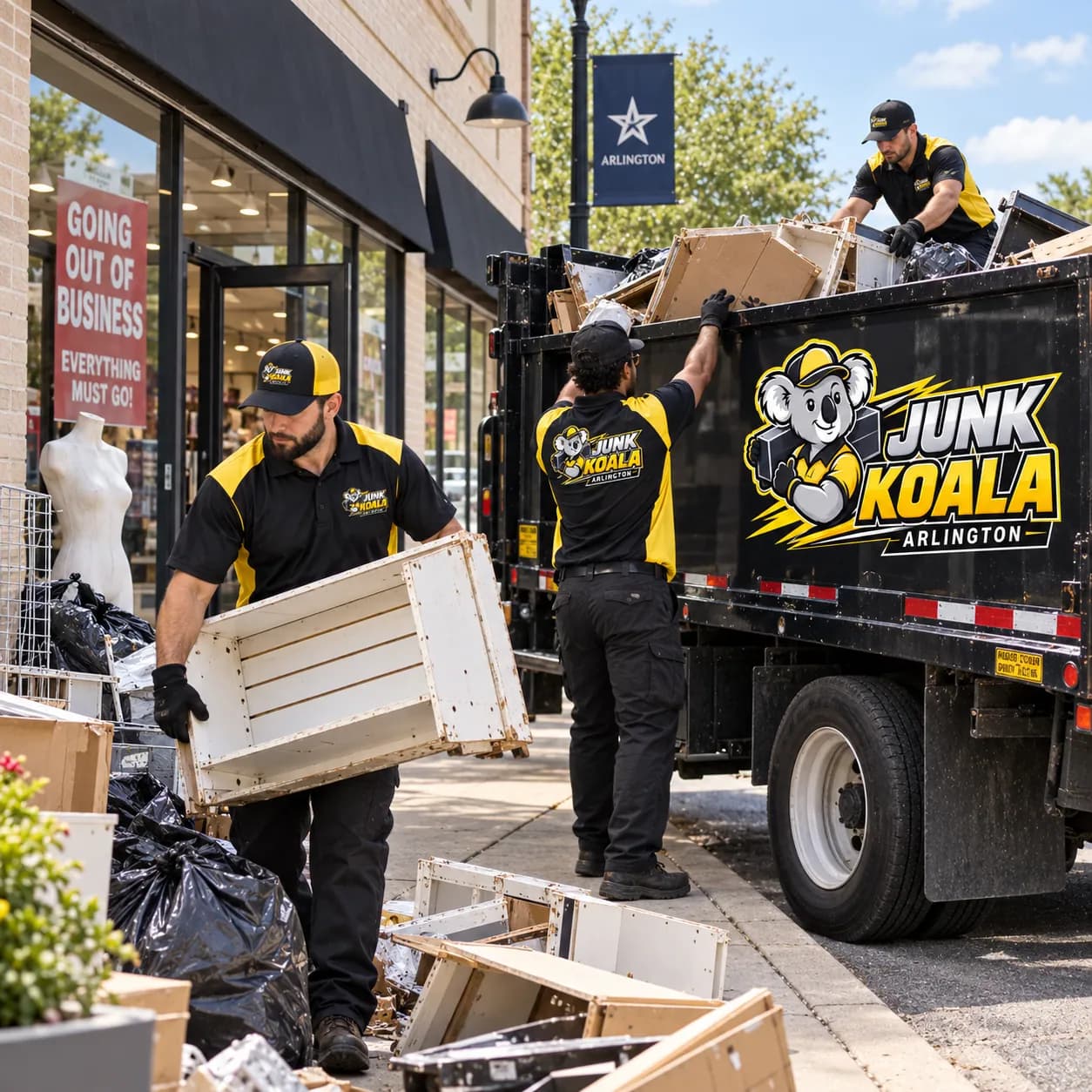
Read the lease before you scope anything
Retail leases vary considerably in what has to be removed at the end. Some require only the tenant's goods and fixtures. Many require tenant improvements stripped and the unit returned to shell. A few specify reinstatement to a described condition.
The difference between those is not marginal — it is the difference between a one-truck clearance and a multi-day strip-out with a contractor following behind to make good. Scoping without reading the clause means scoping the wrong job.
And the consequence of under-delivering is not a return visit. It is a deduction or a holdover charge, calculated by a landlord with no interest in the clearance having been cheap.
What usually has to leave
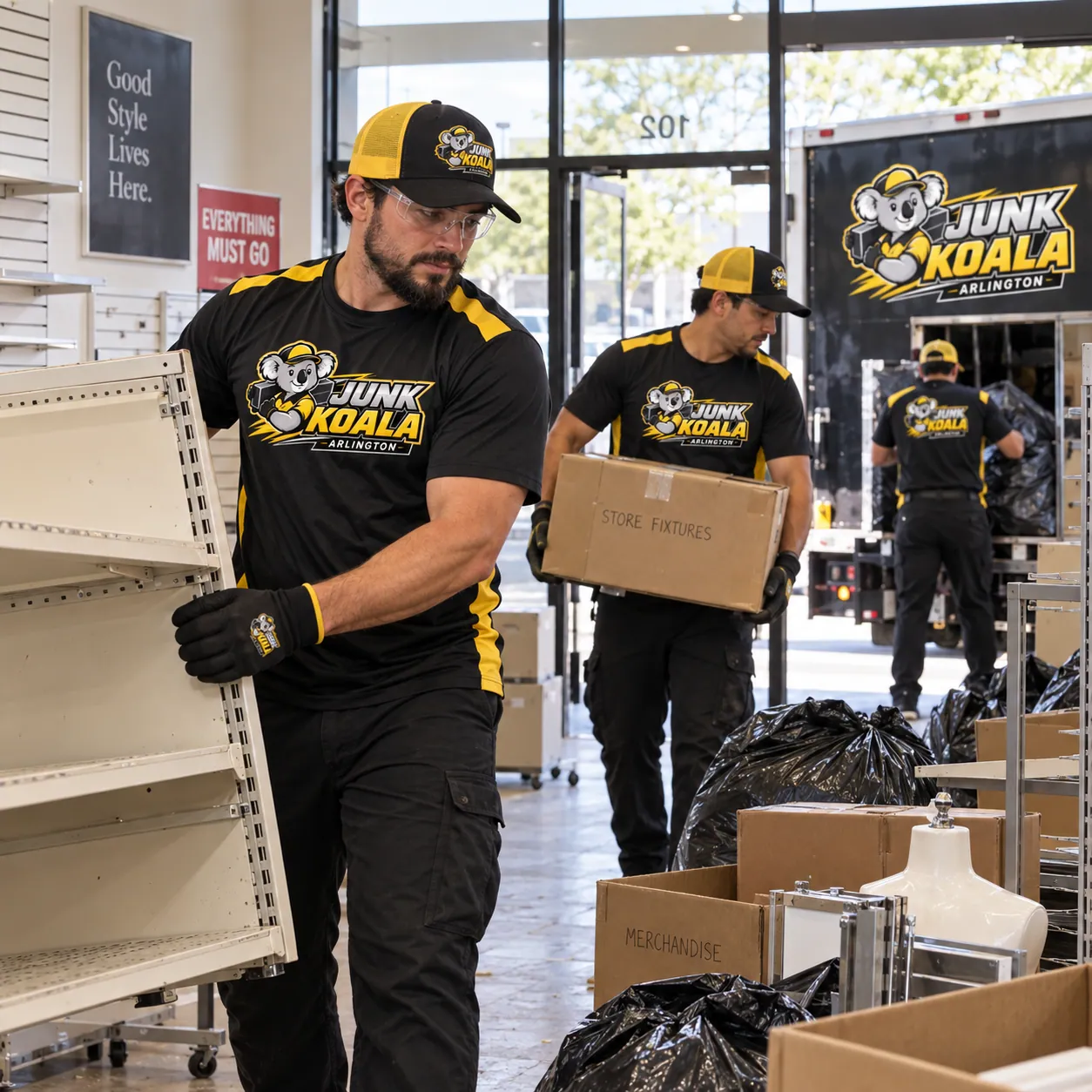
- Gondola shelving, bases and end caps
- Slatwall panels and wall standards
- Display cases, vitrines and counters
- Cash wrap and back counters
- Fitting room partitions, doors and mirrors
- Mannequins, forms and props
- Internal signage and light boxes
- External signage, where the lease requires it
- Stockroom shelving and racking
- Remaining stock and packaging
- Back-office furniture and equipment
- Floor coverings and ceiling grid, where specified
Decide about the stock before the last day
What happens to unsold inventory is a business decision that has to be made before a truck arrives, because it is irreversible afterwards. Some stock returns to a distribution center. Some is contractually required to be destroyed rather than disposed of or donated — this is common for branded goods and for anything under a licensing agreement. Some can simply go.
A clearance crew cannot make that call and should not be asked to. Sorting it in advance takes an email and prevents a genuinely serious problem.
Working alongside trading neighbours
A unit in a mall or a busy strip center shares its service area, its parking and its frontage with businesses that are still trading. Removals therefore go through service corridors outside trading hours, or through the front early in the morning before the center fills.
In smaller Arlington strip centers with no dock, the truck loads from the front or a rear service area, and the timing is chosen to avoid the neighbours' peak rather than the crew's convenience.
- Overnight and early-morning windows
- Service corridors and booked docks where they exist
- Front loading where there is no dock
- Neighbouring trade considered in the schedule
Book it for the day after trading ends
Not the day before handback. The margin is what protects you from a holdover charge.
FAQ
Related questions
- How do I know what has to be removed?
- The lease says. Clauses range from tenant goods only to a full strip back to shell, and those are entirely different jobs. Send the clause with your photographs so the quote reflects the actual obligation.
- What should happen to unsold stock?
- Decide before the clearance. Some returns to a DC, some is contractually required to be destroyed, some can simply go. It is irreversible once loaded and it is not a decision a crew can make.
- Do you patch the walls after removing fixings?
- No — removal is hauling, making good is a contractor's job. Most leases require both, so plan a following trade rather than discovering it at the handback.
- Can the fixtures be resold?
- Sometimes. Gondola in good condition has a secondary market. Say so in advance so it is dismantled carefully rather than quickly — those are different jobs.
Ready when you are
You point. We haul. That is the whole arrangement.
Choose a window from the live Arlington calendar, or send a few photographs and get the number first. Homes or businesses, one item or a whole property.
Or call (972) 093-0938
The Arlington branch
Junk Koala Arlington
1140 W Pioneer Pkwy, Ste 1144E
Arlington, TX 76013